Breakfast Meal Prep Ideas for a Healthy Week
Breakfast meal prep can make busy mornings easier by helping you prepare nutritious meals ahead of time. Instead of deciding what to eat every morning, you can prepare several breakfast options in advance and have them ready when you need them.
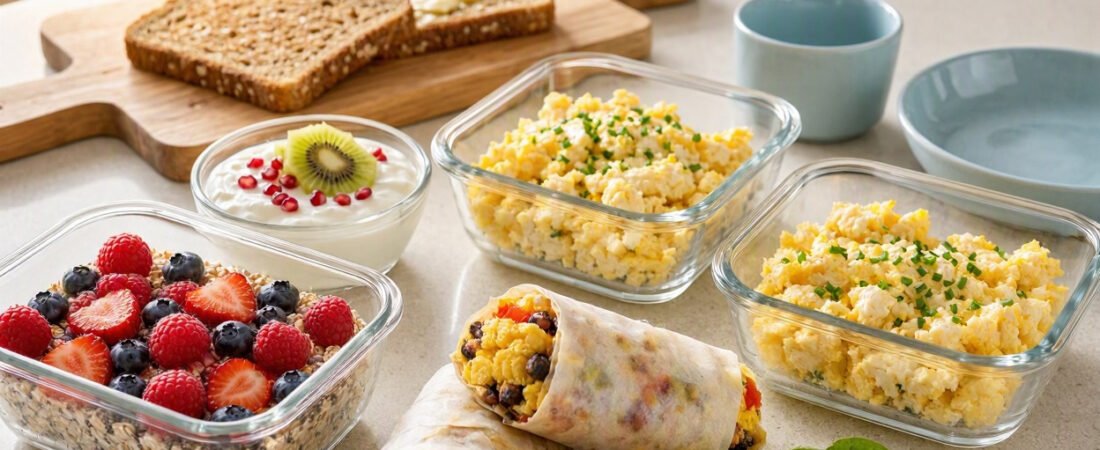
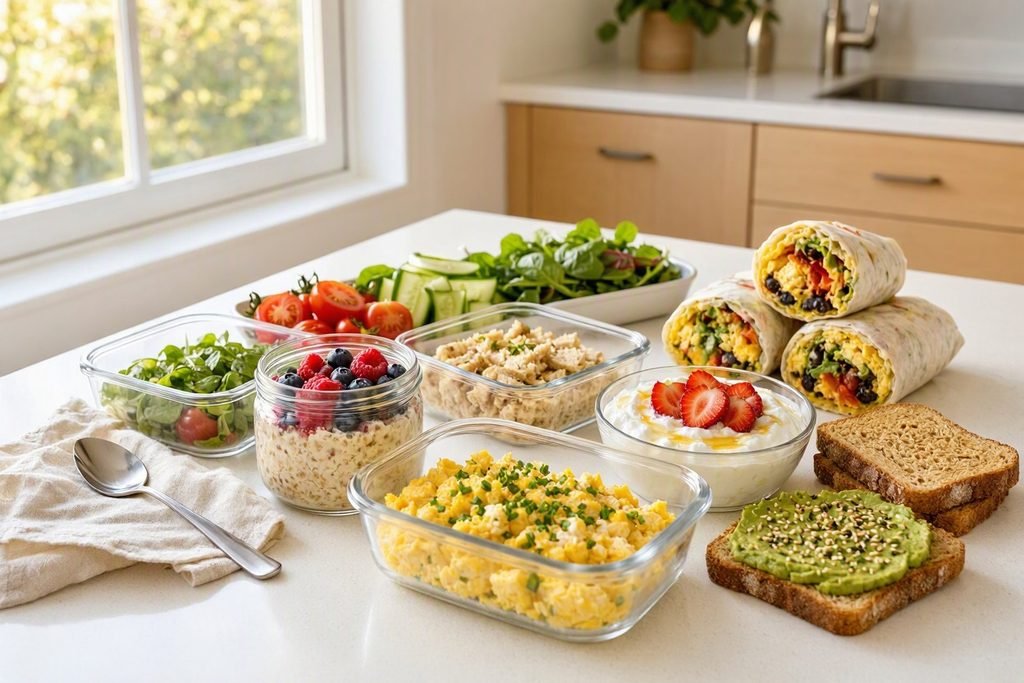
A good breakfast meal prep routine does not have to be complicated. You can prepare simple foods such as overnight oats, eggs, yogurt, fruit, breakfast sandwiches, or burritos and combine them in different ways throughout the week.
Planning your meals ahead can also make it easier to include a variety of nutrient-dense foods. The CDC recommends a healthy eating pattern that includes vegetables, fruits, protein, whole grains, healthy fats, and dairy foods without added sugars. (CDC)
In this guide, you will find easy breakfast meal prep ideas, high-protein and low-calorie options, storage tips, and a simple 5-day breakfast meal prep plan.
What Is Breakfast Meal Prep?
Breakfast meal prep means preparing some or all of your breakfast foods ahead of time so they are ready to eat during the week.
Depending on your schedule, you can:
- Prepare complete breakfasts in advance.
- Cook ingredients that can be combined into different meals.
- Prepare breakfast for a few days at a time.
- Freeze some meals for later.
- Portion ingredients into individual containers.
- Prepare grab-and-go breakfasts for busy mornings.
You do not need to prepare seven identical breakfasts. In fact, preparing a few different options can make your meals more enjoyable and help you avoid getting tired of the same food.
How to Plan Breakfast Meal Prep for the Week
Before preparing your food, decide how many breakfasts you actually need.
If you normally eat breakfast five days a week, start with five portions rather than preparing a large amount of food that may go unused.
Choose Your Breakfasts
Pick two or three breakfast options that are easy to prepare and store.
For example:
- Overnight oats
- Egg muffins
- Greek yogurt with fruit
- Breakfast sandwiches
- Breakfast burritos
- Whole-grain toast with eggs
- Chia pudding
- Oatmeal with fruit and nuts
Choosing a few options also allows you to vary your meals throughout the week.
Make a Simple Grocery List
Once you know what you want to prepare, write down the ingredients you need.
A basic breakfast meal prep grocery list might include:
- Eggs
- Greek yogurt
- Oats
- Whole-grain bread
- Whole-grain tortillas
- Fresh or frozen fruit
- Vegetables
- Milk or an unsweetened dairy alternative
- Nuts or seeds
- Beans
- Cheese
- Chicken or another protein source
Frozen fruits and vegetables can also be useful when fresh produce is not convenient or available. The CDC notes that frozen and canned fruits and vegetables can be healthy choices when they are lower in added sugar and sodium.
Prepare Ingredients in Batches
You can save time by preparing several ingredients at the same time.
For example, you could:
- Boil or scramble several eggs.
- Cook vegetables.
- Prepare several portions of oats.
- Wash and portion fruit.
- Prepare breakfast sandwiches.
- Divide everything into individual containers.
This makes your breakfast routine easier because much of the work is completed in one preparation session.
Easy Breakfast Meal Prep Ideas
There are many ways to prepare breakfast ahead of time. Choose options based on your preferences, schedule, and storage needs.
Overnight Oats
Overnight oats are one of the easiest breakfast meal prep options because they require little or no cooking.
Combine oats with milk or another liquid, then add ingredients such as:
- Greek yogurt
- Chia seeds
- Berries
- Banana
- Cinnamon
- Nuts
- Nut butter
Prepare individual jars or containers and refrigerate them until ready to eat.
You can also prepare different flavors during the same meal prep session to avoid eating the exact same breakfast every day.
Egg Breakfasts
Eggs can be used in several different breakfast meal prep recipes.
Try preparing:
- Egg muffins
- Scrambled eggs with vegetables
- Hard-boiled eggs
- Egg and vegetable bowls
- Egg breakfast sandwiches
- Egg burritos
Add vegetables such as spinach, peppers, onions, mushrooms, or tomatoes for more variety.
Breakfast Sandwiches
Breakfast sandwiches are useful when you need a quick grab-and-go breakfast.
A simple sandwich can include:
- Eggs
- Cheese
- Vegetables
- Whole-grain English muffin or bread
- Chicken or another protein source
Prepare several sandwiches at once and refrigerate or freeze them depending on when you plan to eat them.
Breakfast Burritos
Breakfast burritos are another flexible option.
Fill a whole-grain tortilla with ingredients such as:
- Scrambled eggs
- Beans
- Vegetables
- Cheese
- Chicken
- Salsa
Wrap each burrito individually so it is easy to store and reheat.
Yogurt and Fruit
For a no-cook option, prepare individual portions of Greek yogurt with fruit.
You can add:
- Berries
- Banana
- Apple
- Chia seeds
- Nuts
- Oats
Keep crunchy toppings separate if you want them to stay crisp.
High Protein Breakfast Meal Prep Ideas
A protein-rich breakfast can be useful if you want a more filling meal or are trying to increase your overall protein intake.
Some easy high-protein breakfast meal prep ideas include:
- Egg and vegetable muffins
- Greek yogurt with berries and nuts
- Overnight oats with Greek yogurt
- Egg and chicken breakfast sandwiches
- Breakfast burritos with eggs and beans
- Cottage cheese with fruit
- Oatmeal topped with Greek yogurt and seeds
The CDC includes eggs, poultry, beans, peas, lentils, nuts, seeds, soy, and other foods among healthy protein options.
You can also pair protein with fiber-rich foods like oats, fruits, vegetables, and whole grains for a more balanced breakfast.
Low Calorie Breakfast Meal Prep Ideas
If you are trying to manage your calorie intake, focus on foods that provide useful nutrients without relying heavily on added sugars or highly processed ingredients.
Some options include:
- Greek yogurt with berries
- Vegetable egg muffins
- Oatmeal with fruit
- Egg and vegetable bowls
- Cottage cheese with fruit
- Overnight oats with fruit
- Whole-grain toast with eggs and vegetables
Vegetables and fruits can add volume, fiber, vitamins, and minerals to meals. The CDC also notes that fruits and vegetables can help with fullness while generally being lower in calories than many calorie-dense foods.
However, a low-calorie breakfast does not have to mean eating as little as possible. Your overall nutritional needs and daily calorie intake matter more than making one meal extremely low in calories.
Breakfast Meal Prep for Weight Loss
Breakfast meal prep can make weight management easier by helping you plan your meals ahead and avoid relying on less nutritious convenience foods when you are short on time.
A simple approach is to build your breakfast around:
- A protein source
- A fiber-rich carbohydrate
- Fruit or vegetables
- A moderate amount of healthy fat
For example, you could prepare eggs with vegetables and whole-grain toast, or Greek yogurt with fruit, oats, and a small amount of nuts.
The CDC recommends choosing a variety of nutrient-dense foods and staying within your daily calorie needs when working toward healthy weight management.
Meal prep alone does not guarantee weight loss, but it can make consistent meal planning easier.
Make-Ahead Breakfast Sandwiches
Breakfast sandwiches are especially useful if you need something you can take with you.
To prepare them:
- Cook your eggs and vegetables.
- Prepare your chosen protein.
- Assemble the sandwiches.
- Allow hot ingredients to cool appropriately before storage.
- Wrap or place each sandwich in a suitable container.
- Refrigerate the portions you plan to eat soon.
- Freeze portions that you want to keep for later.
When reheating frozen food, follow safe thawing and reheating practices rather than leaving food at room temperature for extended periods.
How to Store Meal Prep Breakfasts
Proper storage is an important part of breakfast meal prep.
Perishable foods, including cooked leftovers, eggs, meat, and dairy products, should be refrigerated at 40°F (4.4°C) or below. USDA guidance recommends using refrigerated leftovers within 3 to 4 days or freezing them for longer storage.
For safer storage:
- Use clean, airtight containers.
- Divide food into smaller portions.
- Refrigerate perishable food promptly.
- Keep your refrigerator at 40°F (4.4°C) or below.
- Freeze portions that you will not eat within the recommended refrigerator storage period.
- Label frozen meals with the date.
Do not leave perishable breakfast foods at room temperature for long periods. USDA guidance recommends refrigerating leftovers within two hours, or within one hour when temperatures are above 90°F (32°C).
5-Day Breakfast Meal Prep Plan
Here is a simple example of how you can add variety to your breakfast meal prep routine:
| Day | Breakfast |
|---|---|
| Monday | Overnight oats with berries and Greek yogurt |
| Tuesday | Egg and vegetable breakfast sandwich |
| Wednesday | Greek yogurt with fruit, oats, and nuts |
| Thursday | Egg and bean breakfast burrito |
| Friday | Oatmeal with banana, cinnamon, and seeds |
You can prepare some ingredients in advance while assembling certain breakfasts closer to the day you plan to eat them.
For example, prepare the eggs, vegetables, and oats during your main meal prep session, then combine them into different meals throughout the week.
Common Breakfast Meal Prep Mistakes
Preparing Too Much Food
One of the most common mistakes is preparing more food than you can safely eat.
Start with a few portions and increase the amount once you know what works for your schedule.
Making Every Breakfast the Same
Eating the same meal every day can become boring.
Prepare two or three different breakfast options or use the same basic ingredients in different combinations.
Ignoring Food Storage
Meal prep is not just about cooking. Poor storage can affect the quality and safety of your meals. Make food storage part of your meal prep routine from the beginning.
Choosing Complicated Recipes
If breakfast meal prep takes too much time, you may stop doing it.
Choose simple recipes that use ingredients you already enjoy and can prepare efficiently.
Frequently Asked Questions
How do I meal prep breakfast?
Choose two or three simple breakfast options, prepare the ingredients in batches, portion them into containers, and refrigerate or freeze them according to food-safety recommendations.
What are easy breakfast meal prep ideas?
Overnight oats, egg muffins, breakfast sandwiches, breakfast burritos, Greek yogurt with fruit, and oatmeal are all simple options that can be prepared ahead of time.
How long does meal prep breakfast last?
Many refrigerated leftovers can be kept for 3 to 4 days. Foods that will not be eaten within that period can often be frozen for longer storage.
What are good high-protein breakfast meal prep ideas?
Eggs, Greek yogurt, cottage cheese, beans, and breakfast sandwiches made with eggs and another protein source can all be used in high-protein breakfast meal prep.
Can I meal prep breakfast sandwiches?
Yes. Breakfast sandwiches can be prepared in batches and refrigerated or frozen. Prepare them in individual portions so they are easy to store, reheat, and take with you.
What are good low-calorie breakfast meal prep ideas?
Greek yogurt with fruit, vegetable egg muffins, oatmeal with fruit, and egg-and-vegetable bowls can be useful options. Focus on nutrient-dense ingredients rather than simply making the meal as low in calories as possible.
Final Thoughts
Breakfast meal prep does not need to involve complicated recipes or hours in the kitchen. A few simple ingredients and some basic planning can give you several convenient breakfast options for the week.
Start with two or three meals you enjoy, prepare them in manageable portions, and adjust your routine based on what works for you.
For more meal prep ideas, explore our guides on How to Start Meal Prepping, High Protein Meal Prep, and Low Calorie Meal Prep.
About the Author
Written by: Maisam Salam
Maisam Salam is an SEO content writer and content specialist with experience creating clear, research-based content across health and wellness, technology, AI, SEO, and content marketing. She focuses on creating useful, reader-friendly content based on search intent, reliable sources, and practical information.
View my LinkedIn profile
Content Note
This article provides general nutrition and food-preparation information and is not a substitute for individualized medical or dietary advice.
Sources
Healthy Eating Tips | Nutrition | CDC
https://www.cdc.gov/healthy-weight-growth/healthy-eating/
https://www.cdc.gov/healthy-weight-growth/healthy-eating/fruits-vegetables.html