
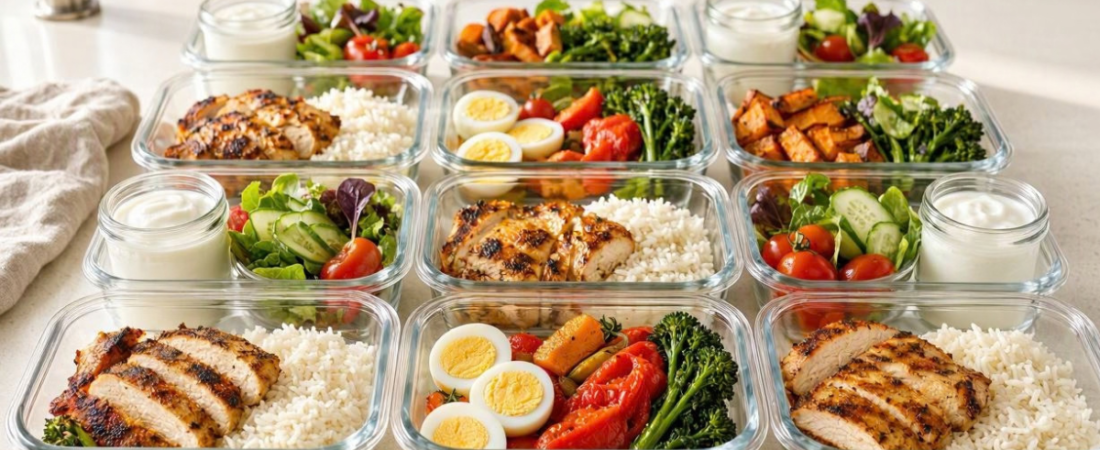
Easy High Protein Meal Prep Ideas for the Week
High protein meal prep is a practical way to prepare nutritious meals in advance, save time during the week, and make it easier to include protein-rich foods in your meals.
You do not need complicated recipes or expensive ingredients to get started. With a few protein sources, vegetables, carbohydrates, and simple seasonings, you can prepare several meals ahead of time and create different combinations throughout the week.
In this guide, you will learn how to start high protein meal prep, choose easy meal ideas, build a 7-day meal prep plan, and store prepared food safely.
What Is High Protein Meal Prep?
High protein meal prep means preparing meals or meal components in advance while making protein-rich foods an important part of your meals.
Common protein sources include:
- Chicken and turkey
- Fish and seafood
- Eggs
- Greek yogurt and cottage cheese
- Lean beef
- Beans and lentils
- Chickpeas
- Tofu and tempeh
- Nuts and seeds
A balanced eating pattern includes a variety of protein-rich foods alongside vegetables, fruits, whole grains, and healthy fats. According to the CDC, healthy protein choices can include poultry, seafood, eggs, beans, lentils, nuts, seeds, and soy.
Instead of cooking every meal from scratch, you can prepare several ingredients in batches and combine them in different ways throughout the week.
For example, you could prepare chicken, rice, roasted vegetables, boiled eggs, and Greek yogurt in advance and use them to create different meals.
How to Start High Protein Meal Prep
Starting with a simple system is usually easier than trying to prepare an entire week’s worth of complicated recipes.
If you are new to meal prep, start with our guide on how to start meal prepping.
1. Choose Your Protein Sources
Start by choosing two or three protein sources for the week, such as chicken breast, eggs, fish, or tofu.
Some easy options include:
- Chicken breast or chicken thighs
- Turkey
- Eggs
- Fish
- Lean beef
- Greek yogurt
- Cottage cheese
- Beans
- Lentils
- Tofu
Using different protein sources throughout the week can make your meals more varied and easier to maintain.
2. Add Vegetables and Carbohydrates
High protein meal prep does not mean eating protein alone.
Build balanced meals by combining your protein source with vegetables and a carbohydrate source such as:
- Rice
- Potatoes
- Oats
- Quinoa
- Whole-grain bread
- Whole-grain wraps
- Beans and lentils
Vegetables and fruits also provide fiber and a variety of vitamins and minerals. The CDC recommends emphasizing vegetables, fruits, protein foods, whole grains, and healthy fats as part of a healthy eating pattern.
3. Prepare Ingredients in Batches
You do not need to cook seven completely different meals.
Instead, prepare several basic ingredients at the same time.
For example:
Protein
- Grilled chicken
- Boiled eggs
Carbohydrates
- Rice
- Roasted potatoes
Vegetables
- Broccoli
- Carrots
- Bell peppers
Extras
- Greek yogurt
- Fruit
- Nuts
You can then combine these ingredients differently throughout the week.
4. Portion Your Meals
Divide prepared food into individual containers so your meals are ready when you need them.
Your portions do not have to be identical every day. The amount of food you need can vary depending on factors such as your body size, activity level, age, and personal goals.
If you are following a specific nutrition plan or have a medical condition, consider getting individualized advice from a qualified healthcare professional.
5. Keep Meal Prep Simple
One of the easiest ways to make meal prep sustainable is to avoid making it unnecessarily complicated.
Choose ingredients that can be used in several meals.
For example, cooked chicken can become:
- A rice bowl
- A wrap
- A salad
- A potato bowl
- A meal-prep lunch
This gives you variety without requiring five different cooking sessions.
High Protein Meal Prep Ideas
High protein meals and meal prep recipes can be simple, affordable, and flexible.
Chicken Meal Prep
Chicken is a practical option because it can be prepared in batches and combined with many different ingredients.
Try:
- Chicken, rice, and broccoli bowls
- Chicken and roasted potatoes
- Chicken and quinoa bowls
- Chicken wraps with vegetables
- Chicken and bean bowls
- High protein meal prep with chicken thighs
Changing the seasonings, vegetables, and sauces can also help prevent your meals from becoming repetitive.
You can find more healthy recipes on GymCalories.
High Protein Lunch Ideas
Lunches should be easy to store, transport, and reheat when necessary.
Some high protein lunch ideas include:
- Chicken and rice bowls
- Turkey wraps
- Tuna and chickpea salad
- Egg and vegetable wraps
- Greek yogurt bowls
- Lentil and chicken bowls
- Turkey and quinoa bowls
If you take meals to work, use suitable food-storage containers and keep perishable foods properly refrigerated.
Vegetarian High Protein Meal Prep
You can create high protein meal prep without meat.
Useful vegetarian protein sources include:
- Eggs
- Greek yogurt
- Cottage cheese
- Lentils
- Beans
- Chickpeas
- Tofu
- Tempeh
- Edamame
Combine these foods with vegetables, grains, potatoes, or whole-grain wraps to create balanced meals.
Vegan High Protein Meal Prep
For vegan meal prep, useful protein sources include:
- Lentils
- Beans
- Chickpeas
- Tofu
- Tempeh
- Edamame
- Other soy-based foods
For example, you could prepare tofu with brown rice and broccoli for lunch, then use lentils with roasted vegetables and potatoes for dinner.
7-Day High Protein Meal Prep Plan
A 7-day high protein meal prep plan does not have to include seven completely different recipes.
Prepare a few core ingredients and combine them differently throughout the week.
| Day | Breakfast | Lunch | Dinner |
|---|---|---|---|
| Monday | Greek yogurt, berries, and oats | Chicken rice bowl | Turkey and vegetables |
| Tuesday | Eggs and whole-grain toast | Chicken and roasted potatoes | Lentil bowl |
| Wednesday | Greek yogurt and fruit | Turkey wrap | Chicken and vegetables |
| Thursday | Egg and vegetable wrap | Chicken quinoa bowl | Beans and rice |
| Friday | Oats with Greek yogurt | Tuna and chickpea salad | Chicken and potatoes |
| Saturday | Eggs and vegetables | Turkey rice bowl | Lentil and vegetable bowl |
| Sunday | Greek yogurt, oats, and fruit | Chicken and quinoa bowl | Fish with vegetables and potatoes |
You can change the ingredients according to your budget, dietary preferences, schedule, and the foods available to you.
If you prepare food for the entire week, remember that cooked leftovers generally should not stay refrigerated for the whole seven days. USDA guidance recommends using refrigerated leftovers within 3–4 days or freezing them for longer storage.
High Protein Meal Prep for Muscle Gain: What to Know
If your goal is muscle gain, high protein meal prep can make it easier to consistently include protein-rich foods in your meals.
However, protein is only one part of a muscle-building nutrition plan.
Your overall diet also needs to provide enough energy and other nutrients to support your training and recovery.
For more meal-planning ideas, explore our Nutrition Plans.
A balanced meal can include:
- A protein source
- A carbohydrate source
- Vegetables or fruit
- A source of healthy fats when appropriate
For example:
Chicken + rice + vegetables
or
Lean beef + potatoes + vegetables
or
Tofu + quinoa + vegetables
There is no single protein target that is appropriate for everyone. Individual needs vary, so a general meal plan should be treated as a starting point rather than personalized nutrition advice.
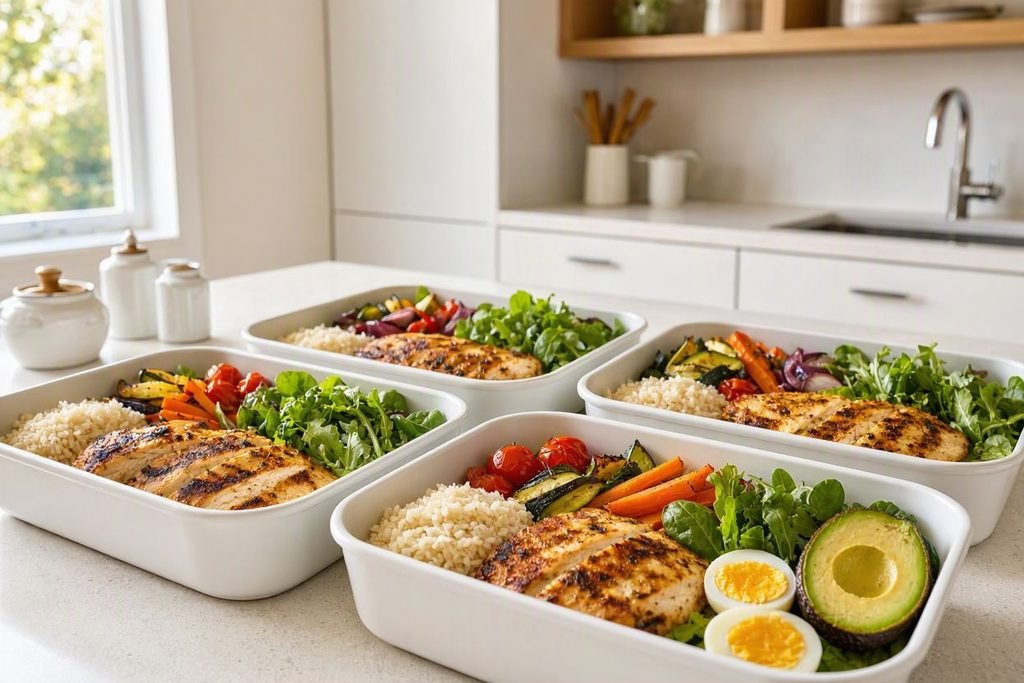
Low Calorie High Protein Meal Prep
If you want to manage your calorie intake while prioritizing protein, focus on nutrient-dense foods and reasonable portions.
Some useful options include:
- Chicken breast
- Turkey
- White fish
- Tuna
- Eggs and egg whites
- Greek yogurt
- Cottage cheese
- Beans and lentils
- Tofu
- Vegetables
- Fruit
Cooking methods such as baking, grilling, steaming, or air frying can also help reduce the need for large amounts of added oil.
However, low calorie does not automatically mean healthy. A balanced eating pattern should still include a variety of nutrient-dense foods. The CDC recommends emphasizing vegetables, fruits, protein foods, whole grains, and healthy fats while limiting excess added sugars and highly processed foods.
How Much Protein Should You Include in Each Meal?
There is no single protein amount that works for everyone.
Protein needs vary depending on factors such as body size, age, activity level, and personal goals.
Instead of focusing only on the protein amount in one meal, consider your overall daily intake and the quality and variety of your diet.
For general meal planning, including a clear protein source in each meal can be a practical starting point.
If you have a specific protein goal for muscle gain, athletic performance, or another health or fitness objective, a registered dietitian or qualified healthcare professional can help you determine an appropriate amount for your individual needs.
How to Store High Protein Meal Prep Safely
Food safety is an important part of meal prep, especially when preparing meat, eggs, dairy, and other perishable foods.
The FDA recommends keeping the refrigerator at or below 40°F (4°C) and the freezer at 0°F (-18°C).
The USDA recommends refrigerating or freezing leftovers promptly and using refrigerated leftovers within 3–4 days.
Follow these basic practices:
- Store prepared food in clean, covered containers.
- Refrigerate or freeze perishable food promptly.
- Keep your refrigerator at 40°F (4°C) or below.
- Divide large amounts of food into shallow containers to help them cool more quickly.
- Freeze meals that you will not use within the recommended refrigerated storage period.
- Reheat leftovers to 165°F (74°C).
- Do not rely only on smell or appearance to determine whether food is safe.
Perishable foods should generally not be left at room temperature for more than two hours, or for more than one hour when the temperature is above 90°F (32°C).
If you are preparing meals for an entire week, consider freezing some portions instead of storing all seven days of cooked meals in the refrigerator.
Common High Protein Meal Prep Mistakes
Preparing Too Many Meals
Trying to prepare seven different recipes at once can make meal prep unnecessarily difficult.
Start with a few meals and ingredients that can be reused in different combinations.
Eating the Same Meal Every Day
Even if a meal is nutritious, eating exactly the same thing every day can become boring.
Change your vegetables, seasonings, sauces, and carbohydrate sources to create variety.
Focusing Only on Protein
High protein does not automatically mean balanced.
Include vegetables, fruits, whole grains, and other nutrient-dense foods as part of your overall eating pattern.
Ignoring Food Storage
Meal prep is only useful when prepared food is stored safely.
Follow recommended refrigeration and freezing practices and pay attention to storage times.
Making Meal Prep Too Complicated
You do not need dozens of recipes to create an effective meal-prep routine.
Choose simple meals, batch-cook versatile ingredients, and keep a few quick backup options available.
My Practical Meal Prep Tip
One thing I recommend is preparing ingredients rather than seven completely finished meals.
For example, instead of cooking seven different dishes, prepare chicken, rice, vegetables, eggs, and one or two sauces.
Then combine them differently throughout the week.
This approach gives you more flexibility, reduces cooking time, and makes it easier to change your meals when you get bored with one combination.
Meal prep should make your week easier—not feel like another full-time job.
Frequently Asked Questions
What is high protein meal prep?
High protein meal prep means preparing meals or ingredients in advance while emphasizing protein-rich foods such as chicken, fish, eggs, dairy products, beans, lentils, tofu, and other protein sources.
What are easy high protein meal prep ideas?
Easy options include chicken and rice bowls, turkey wraps, Greek yogurt bowls, egg and vegetable wraps, tuna and chickpea salads, lentil bowls, and tofu with rice and vegetables.
What can I meal prep for 7 days?
You can prepare several protein sources, vegetables, carbohydrates, and snacks in advance and combine them into different meals. However, refrigerated cooked leftovers generally should be used within 3–4 days, so some meals should be frozen for later in the week.
Is high protein meal prep good for weight loss?
High protein meal prep can make it easier to plan meals and manage portions, but weight management depends on overall calorie intake and other factors. Eating more protein alone does not guarantee weight loss.
Is high protein meal prep good for muscle gain?
High protein meal prep can make it easier to consistently include protein-rich foods in your diet. Muscle gain also depends on resistance training, adequate energy intake, recovery, and overall diet quality.
How long does meal prep last in the fridge?
USDA guidance recommends using most refrigerated leftovers within 3–4 days. Meals that will be kept longer should be frozen when appropriate.
Can I meal prep high protein meals for work?
Yes. Chicken bowls, turkey wraps, tuna salads, Greek yogurt, eggs, and bean-based meals can work well for packed lunches. Perishable foods should be kept properly refrigerated or at a safe temperature during transport.
Final Thoughts
High protein meal prep does not have to be complicated.
Start with a few protein sources, add vegetables and suitable carbohydrate sources, prepare ingredients in batches, and divide meals into convenient portions.
You can then adjust your meals according to your preferences, budget, schedule, and goals.
The best meal prep routine is one that is nutritious, practical, affordable, and easy to repeat.
About the Author
Written by: Maisam Salam
Maisam Salam is an SEO content writer and content specialist with experience creating clear, research-based content across health and wellness, technology, AI, SEO, and content marketing. She focuses on creating useful, reader-friendly content based on search intent, reliable sources, and practical information.
View my LinkedIn profile
Content Note
This article provides general nutrition and food-preparation information. It is not a substitute for individualized medical, nutritional, or dietary advice.