

Weight Loss Plateau: Why You Stop Losing Weight and How to Break Through
You have been eating carefully, staying active, and following your weight-loss plan. At first, the numbers on the scale kept going down. Then, suddenly, your progress slowed or stopped.
This frustrating experience is commonly known as a weight loss plateau. It can happen even when you feel that you are doing everything right.
The good news is that a plateau does not necessarily mean your efforts have stopped working. As your body weight changes, your energy needs and daily habits may change too. Temporary water retention and normal weight fluctuations can also hide progress.
In this guide, you will learn what a weight loss plateau is, how long it may last, why it happens, and how to adjust your routine without resorting to extreme diets or excessive exercise.
What Is a Weight Loss Plateau?
A weight loss plateau occurs when your body weight remains relatively stable for an extended period despite continuing your weight-management efforts.
During the early stages of weight loss, you may notice relatively quick changes. However, as you lose weight, your body generally requires fewer calories to maintain its new weight. Your energy expenditure may also change as your body adapts to a lower calorie intake.
This means the calorie deficit that helped you lose weight initially may become smaller over time.
It is important to distinguish a genuine plateau from ordinary weight fluctuations. Your weight can change from day to day because of water retention, sodium intake, digestion, hormonal changes, and other factors.
A few days without a lower number on the scale do not automatically mean you have reached a plateau.
How Many Weeks Is Considered a Weight Loss Plateau?
There is no single medical definition that determines exactly how many weeks count as a weight loss plateau.
However, if your average weight has remained nearly unchanged for several weeks despite consistent habits, it may be worth reviewing your progress and routine.
A useful way to assess your progress is to:
- Weigh yourself under similar conditions, preferably in the morning.
- Compare weekly average weights rather than individual readings.
- Track your measurements, such as waist circumference.
- Review your food intake and activity levels.
- Consider changes in sleep, stress, and daily routine.
For many people, looking at trends over three to four weeks provides more useful information than reacting to daily changes. Menstrual-cycle-related water retention and other temporary factors may require a longer observation period.
The key is to look for a sustained pattern rather than assuming that every short-term pause is a problem.
How Long Can a Weight Loss Plateau Last?
A weight loss plateau can last several weeks, and its duration varies from person to person.
Some plateaus are temporary and resolve as water retention decreases or daily habits become more consistent. Others may continue because the person’s current calorie intake is close to their updated energy needs.
There is no guaranteed timeline for when a plateau will end.
If your weight has remained stable for several weeks, consider reviewing your calorie intake, activity, and measurements before making major changes.
Avoid responding by drastically reducing food intake or exercising excessively. These approaches can make your routine harder to maintain and may negatively affect your health.
Why Does Weight Loss Plateau?
Several factors can explain why weight loss slows down or stops. Understanding the possible causes can help you choose a realistic next step.
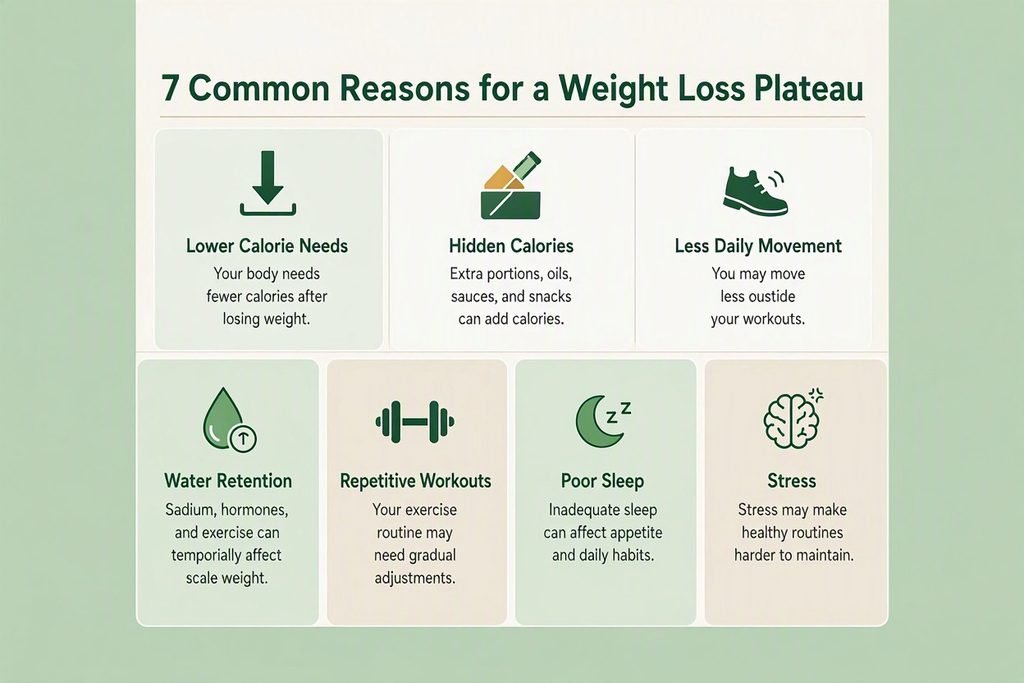
1. Your Body Needs Fewer Calories
As you lose weight, your body generally uses less energy to perform everyday activities and maintain its new weight.
For example, a person weighing less may burn fewer calories while walking the same distance than they did at a higher weight.
This is one reason a calorie deficit can become smaller over time, even when your routine has not changed.
2. Your Calorie Intake May Have Increased Gradually
Small changes in eating habits can add up without being obvious.
Extra cooking oil, larger portions, sauces, drinks, snacks, and frequent restaurant meals may increase your daily calorie intake.
You do not necessarily need to track every bite forever, but reviewing your portions and eating patterns can help identify changes that may have affected your progress.
3. Your Daily Movement Has Decreased
You may still be exercising regularly but moving less during the rest of the day.
For example, you might spend more time sitting because you feel tired after workouts. This reduction in everyday movement can affect your total daily energy expenditure.
Walking, taking the stairs, doing household activities, and standing up regularly can all contribute to daily movement.
4. Water Retention Is Hiding Progress
The scale does not measure body fat alone. It also reflects water, food in your digestive system, and other changes in body mass.
Water retention can temporarily increase weight because of:
- Higher sodium intake.
- Changes in carbohydrate intake.
- Hormonal fluctuations.
- Menstrual-cycle changes.
- New or more intense exercise.
- Muscle soreness and recovery.
You may be making progress while temporary water changes hide it on the scale.
5. Your Exercise Routine Has Become Less Challenging
Repeating the same workout for a long time may lead to improvements in fitness, but your routine may no longer provide the same challenge.
This does not mean you need to exercise harder every day. You can gradually adjust your routine by increasing walking time, changing exercises, or adding appropriate resistance training.
6. Poor Sleep and Stress Affect Your Habits
Sleep and stress can influence appetite, food choices, energy, and motivation.
When you sleep poorly, you may feel hungrier or less motivated to move. Stress may also make it harder to maintain consistent eating habits.
Improving sleep and managing stress can support your overall weight-management routine, even though neither is a guaranteed way to restart weight loss on its own.
7. Your Expectations May Not Match Normal Progress
Weight loss is rarely perfectly consistent. Some weeks show a noticeable change, while others show little or no movement.
If you expect the scale to decrease every week, normal fluctuations may feel like failure.
Instead, evaluate your progress over time and consider other indicators, including measurements, clothing fit, strength, and fitness improvements.
How to Break a Weight Loss Plateau
If you have confirmed that your weight has remained stable for several weeks, you can review your routine and make small, sustainable adjustments.
Here are practical steps to consider.
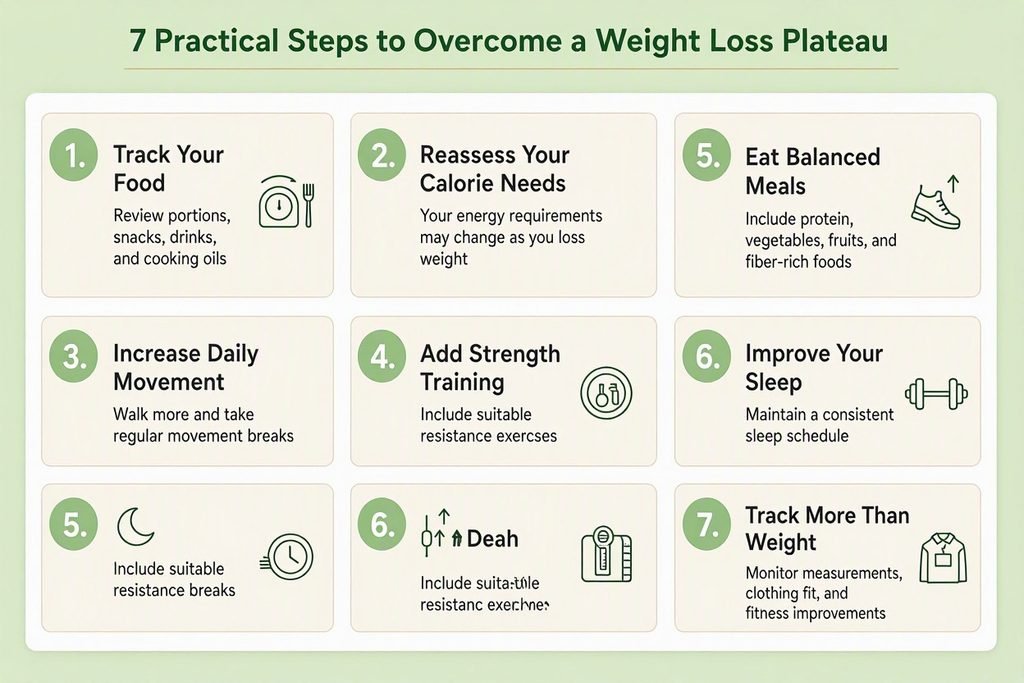
1. Review Your Current Calorie Intake
Start by looking at your eating habits rather than immediately cutting more calories.
Check whether portion sizes have increased or whether small extras have become more frequent.
You can use a food diary or a calorie-tracking tool for a short period to understand your current intake.
The goal is to identify patterns, not to become overly restrictive or anxious about food.
2. Reassess Your Calorie Needs
Your calorie requirements may have changed as your body weight decreased.
A calorie target that previously created a deficit may now be closer to your maintenance needs.
Consider using an updated calorie estimate as a starting point, then assess your progress over time. Online calculators provide estimates rather than exact measurements.
If you are unsure how much you should eat, a registered dietitian or qualified healthcare professional can help you choose an appropriate plan.
3. Increase Daily Movement Gradually
You do not need to spend hours at the gym to become more active.
Try practical changes such as:
- Taking a short walk after meals.
- Using the stairs when appropriate.
- Taking movement breaks during long periods of sitting.
- Increasing your daily step count gradually.
- Choosing activities you enjoy and can maintain.
Walking can be a useful part of a weight-management routine. If you want to build a consistent walking habit, read our guide: Can You Lose Weight by Walking? Benefits, Calories & Tips.
4. Include Strength Training
Strength training can help maintain and build muscle while you lose weight.
Muscle is important for movement, physical function, and overall health. Resistance exercises can include:
- Bodyweight squats.
- Wall push-ups.
- Resistance-band exercises.
- Dumbbell exercises.
- Weight machines.
Start at a level that matches your fitness and experience. Increase resistance or repetitions gradually, and allow enough time for recovery.
5. Eat Enough Protein and Fiber
Protein supports muscle maintenance, while fiber-rich foods can help you feel satisfied after meals.
Consider including protein sources such as:
- Eggs.
- Chicken.
- Fish.
- Greek yogurt.
- Beans and lentils.
- Tofu.
For fiber, choose vegetables, fruits, whole grains, beans, and other plant-based foods.
A balanced eating pattern can make your routine easier to maintain. You can also read our guide on how to start meal prepping for practical meal-planning ideas.
6. Prioritize Sleep and Recovery
Exercise is only one part of a healthy routine. Your body also needs time to recover.
Try to maintain a consistent sleep schedule and create a relaxing bedtime routine.
If you exercise frequently, include rest or lighter-activity days when needed. More exercise is not always better, especially if you are constantly exhausted or struggling to recover.
7. Track More Than the Scale
The scale is useful, but it is not the only way to measure progress.
You can also monitor:
- Waist and hip measurements.
- How your clothes fit.
- Strength and exercise performance.
- Walking endurance.
- Energy levels.
- Consistency with your eating and activity habits.
If your measurements are changing while your scale weight remains stable, you may be experiencing changes that the scale does not show clearly.
Weight Loss Plateau Despite a Calorie Deficit: What Should You Do?
If you believe you are maintaining a calorie deficit but your weight is not changing, take a closer look before making drastic adjustments.
First, remember that calorie estimates are not perfectly precise. Food labels, portion measurements, restaurant meals, and activity trackers can all introduce errors.
Second, consider whether temporary water retention is affecting your scale weight. A change in exercise intensity, sodium intake, or hormonal patterns may temporarily mask changes in body fat.
Third, review your weight trend over several weeks rather than relying on one or two readings.
If your weight remains stable over an extended period despite careful and consistent tracking, a healthcare professional or registered dietitian can help assess your energy needs and identify possible contributing factors.
Do not assume that eating less and less is the answer. Very low calorie intake can make it harder to meet your nutritional needs and maintain a healthy routine.
Can You Lose Inches Without Losing Weight?
Yes. Your body measurements can change even when your scale weight stays relatively stable.
This may happen when you lose body fat while maintaining or gaining muscle, or when temporary changes in water balance affect your weight.
For example, your waist measurement may decrease while your scale weight changes very little.
This is why it can be helpful to track measurements alongside weight. However, changes in measurements are not a precise way to determine how much fat or muscle you have gained or lost.
Will a Weight Loss Plateau Go Away on Its Own?
Sometimes, yes.
A temporary pause in scale progress may resolve when water retention decreases or normal fluctuations settle.
However, if your average weight remains stable for several weeks, your current routine may need reassessment.
Review your calorie intake, daily movement, exercise routine, sleep, and consistency before deciding what to change.
You do not need to make several changes at once. Start with the factor that seems most relevant and monitor your progress.
Can Not Eating Enough Cause a Weight Loss Plateau?
Eating too little does not automatically cause the body to stop losing fat.
However, an overly restrictive diet can make weight management more difficult. It may increase fatigue, reduce everyday movement, affect exercise performance, and make it harder to meet your nutritional needs.
A very low calorie intake may also be difficult to maintain consistently.
Instead of skipping meals or drastically reducing portions, focus on a balanced eating pattern that provides enough energy, protein, fiber, vitamins, and minerals.
If you are regularly feeling weak, dizzy, or excessively tired while dieting, seek advice from a healthcare professional.
When Should You Talk to a Healthcare Professional?
Consider seeking professional advice if your weight changes unexpectedly, your plateau continues despite consistent efforts, or you experience symptoms that concern you.
A healthcare professional can review your medical history, medications, nutrition, and activity levels to determine whether another factor may be affecting your progress.
This is particularly important if you have a medical condition, are taking medication that affects weight, or are considering a very restrictive diet.
Frequently Asked Questions
What is a weight loss plateau?
A weight loss plateau is a period when your average body weight remains relatively stable despite continuing your weight-management efforts.
How many weeks is considered a weight loss plateau?
There is no universally accepted number of weeks. A stable weight trend over several weeks may be a reason to review your routine, while short pauses are often normal fluctuations.
How long does a weight loss plateau last?
It varies. Some plateaus resolve within a few weeks, while others continue until changes in calorie intake, activity, or other contributing factors are addressed.
How do I break a weight loss plateau?
Review your calorie intake, daily movement, exercise routine, sleep, and recovery. Make gradual changes rather than drastically restricting food or exercising excessively.
Why am I not losing weight while dieting and exercising?
Possible reasons include changes in energy needs, inaccurate portion estimates, reduced daily movement, water retention, and normal weight fluctuations.
Can a cheat day break a weight loss plateau?
A cheat day is not a reliable way to break a plateau. One day of eating more calories does not guarantee increased fat loss. Focus on consistent, balanced habits instead.
Can a weight loss plateau last forever?
A plateau does not necessarily last forever. However, if your current calorie intake matches your energy expenditure, your weight may remain stable until your routine or circumstances change.
Is it normal to plateau during weight loss?
Yes. Weight loss often slows as your body weight decreases, and temporary fluctuations can make progress appear to stop.
Final Thoughts
A weight loss plateau can be frustrating, but it does not mean that your efforts have failed.
As your body changes, your calorie needs, daily movement, and progress may change too. Temporary water retention and normal fluctuations can also make it difficult to see what is happening.
Rather than reacting with extreme diets or excessive workouts, review your habits, track your progress over time, and make small adjustments that support your health.
Consistency, realistic expectations, and a sustainable routine matter more than trying to force the scale to move every day.
References
- https://www.cdc.gov/healthy-weight-growth/physical-activity/
- https://www.niddk.nih.gov/health-information/weight-management/adult-overweight-obesity/eating-physical-activity
- https://www.niddk.nih.gov/health-information/weight-management/keep-active-eat-healthy-feel-great
- https://www.cdc.gov/physical-activity-basics/guidelines/adults.html

Dr. Zakaria Alagha
Internal Medicine Resident Physician at Marshall University | MBBCh & MSc in Cardiovascular Diseases from Cairo University.
Passionate about medical research, teaching, volunteering, developing future medical professionals, and improving patient care.