
Can You Lose Weight by Walking? Benefits, Calories & Tips
Walking is one of the easiest ways to become more active and support a healthier lifestyle. It does not require expensive equipment, a gym membership, or advanced fitness skills. But can you lose weight by walking regularly? Yes. Walking can contribute to weight loss by increasing the calories your body uses throughout the day, especially when combined with balanced eating habits.
If you are wondering, can you lose weight by walking every day, the answer depends on your activity level, eating habits, walking pace, and consistency. Even short walks can help you build healthier habits and become more active over time.
In this guide, you will learn how walking supports weight loss, how many calories it may burn, how long you should walk, and how to create a practical routine that fits your lifestyle.
Can You Really Lose Weight by Walking?
Yes, walking can help you lose weight because it increases your daily energy expenditure. When your body uses more calories than you consume over time, you create a calorie deficit, which supports weight loss.
Walking is a low-impact activity, making it a practical starting point for people who find high-intensity workouts difficult. You can begin with short walks and gradually increase your duration, distance, or pace as your fitness improves.
Understanding how can you lose weight by walking fits into your overall routine starts with recognizing that physical activity is only one part of weight management. Your food intake, sleep, daily movement, and consistency also matter.
How Does Walking Help You Lose Weight?
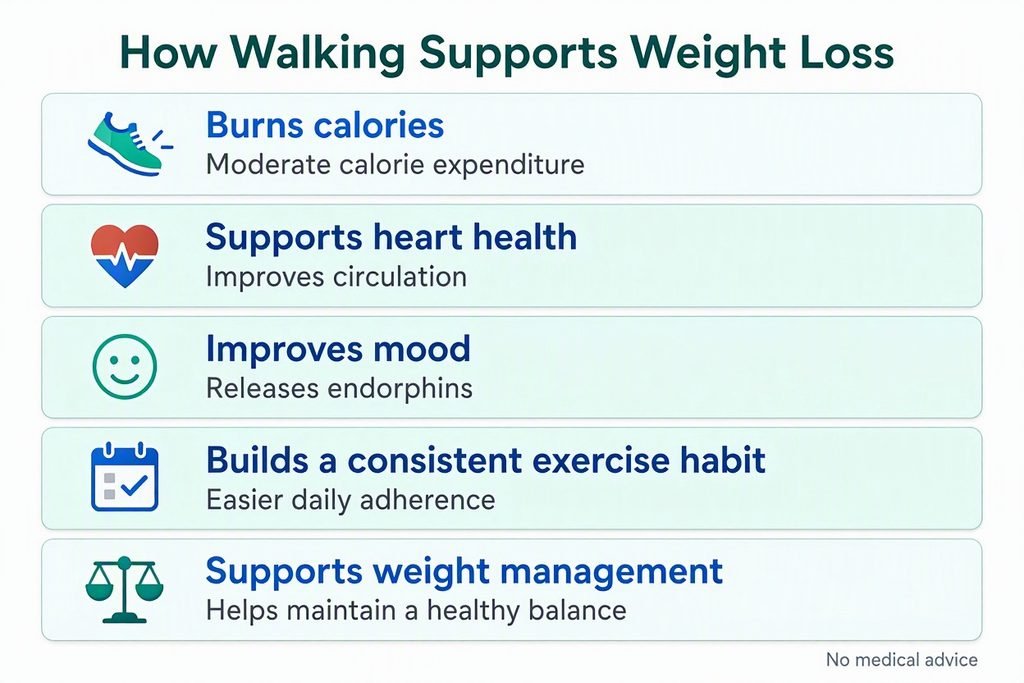
Walking supports weight management in several ways.
1. It Increases Daily Calorie Burn
Your body uses energy throughout the day, and walking increases the amount of energy you burn. Longer walks, faster walking speeds, and uphill routes generally require more effort and use more calories.
2. It Helps Build a Consistent Exercise Routine
Unlike some demanding workouts, walking is easy to fit into a daily schedule. You can walk outdoors, use a treadmill, or take short walks during breaks. Making movement part of your routine can help you stay active over the long term.
3. It Supports Cardiovascular Health
Regular walking can improve cardiovascular fitness and contribute to better overall health. It can also help improve stamina, making everyday activities feel easier.
4. It Can Support Long-Term Weight Management
Maintaining weight loss often requires sustainable habits. Walking is accessible and adaptable, so you can continue doing it as your fitness level changes.
How Many Calories Can You Burn by Walking?
The number of calories burned while walking depends on several factors, including:
- Your body weight.
- Walking speed and intensity.
- How long you walk.
- The terrain and incline.
- Your individual metabolism.
For example, the CDC estimates that a person weighing around 154 pounds (70 kg) may burn approximately 140 calories during 30 minutes of walking at 3.5 miles per hour. This is an estimate, not a guaranteed result for every person.
A person with a higher body weight may burn more calories while doing the same activity, while a slower pace may use less energy.
Remember that calorie estimates are useful for understanding activity, but they should not be treated as exact measurements.
How Long Should You Walk to Lose Weight?
There is no single walking duration that works for everyone. Your starting fitness level, schedule, and overall activity matter.
The CDC recommends at least 150 minutes of moderate-intensity aerobic activity per week for adults, along with muscle-strengthening activities on two or more days.
You can divide your walking time into manageable sessions. For example:
- 30 minutes a day, five days a week.
- 20 minutes in the morning and 10 minutes in the evening.
- Three 10-minute walks spread throughout the day.
If you are new to exercise, start with a duration you can manage comfortably. Increase your walking time gradually rather than trying to do too much at once.
Can You Lose Weight by Walking for 30 Minutes a Day?
Walking for 30 minutes a day can support weight loss, particularly when you do it consistently and combine it with balanced eating habits.
So, can you lose weight by walking for 30 minutes daily? It can contribute to your weekly physical activity and help you maintain a calorie deficit. You do not need to walk quickly from the beginning. Start at a comfortable pace, then gradually increase your speed as your stamina improves.
Your total daily movement and food intake also matter. Walking is helpful, but weight loss depends on your overall habits.
Is Walking Alone Enough to Lose Weight?
Walking alone may help some people lose weight, but combining it with healthy eating habits can make weight management more effective.
Weight loss generally requires a consistent calorie deficit. If you burn additional calories through walking but regularly consume more energy than your body uses, you may not see the results you expect.
You can support your walking routine by:
- Eating balanced meals with vegetables, fruits, protein, and whole grains.
- Paying attention to portion sizes.
- Drinking enough water.
- Limiting frequent high-calorie drinks and snacks.
- Getting enough sleep.
- Adding strength training when appropriate.
You do not need an extreme diet or a complicated workout plan. Focus on realistic changes that you can maintain.
A 4-Week Walking Plan for Beginners
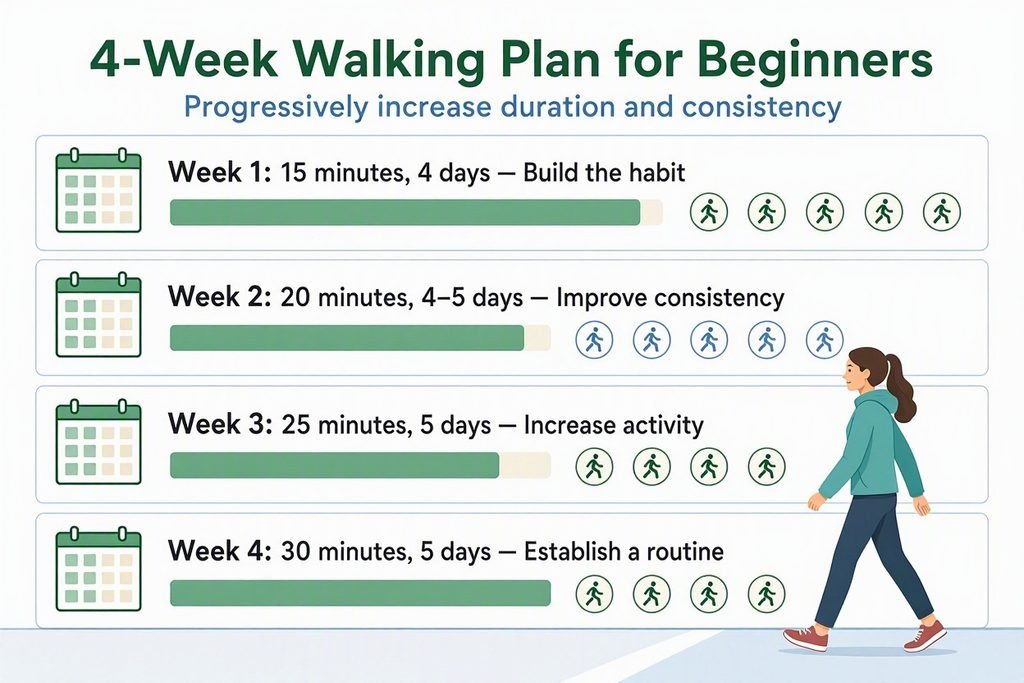
If you are starting from a low activity level, this simple four-week plan can help you build consistency.
| Week | Walking Duration | Frequency | Goal |
|---|---|---|---|
| Week 1 | 15 minutes | 4 days | Build the habit |
| Week 2 | 20 minutes | 4–5 days | Improve consistency |
| Week 3 | 25 minutes | 5 days | Increase activity |
| Week 4 | 30 minutes | 5 days | Establish a routine |
Walk at a comfortable pace during the first week. As you become more comfortable, you can gradually increase your speed or include short periods of brisk walking.
This plan is a starting point, not a strict requirement. Adjust it to your fitness level, and take rest days when needed.
Tips to Make Walking More Effective for Weight Loss
Small adjustments can make your walking routine more challenging and enjoyable.
Walk at a Brisk Pace
Once you feel comfortable, try walking faster while still being able to talk. This increases the intensity of your activity.
Add Short Intervals
Alternate between a few minutes of brisk walking and a few minutes at your normal pace. Begin with short intervals and increase them gradually.
Try Different Routes
Walking uphill or choosing routes with gentle inclines can make your sessions more challenging. Change your route occasionally to keep your routine interesting.
Stay Consistent
A manageable routine that you follow regularly is more useful than an intense routine that you abandon after a few days.
Track Your Progress
You can monitor your walking duration, distance, or weekly activity. If you want to understand how step counts relate to your goals, use our How Many Steps to Lose Weight Calculator to explore a daily step target.
Combine Walking With Strength Training
Strength training can help maintain and build muscle while supporting overall fitness. You can add simple resistance exercises on days when you are not walking.
Why Are You Not Losing Weight Despite Walking?
If you walk regularly but do not notice changes on the scale, several factors may explain why.
You may be consuming more calories than you use. Walking increases energy expenditure, but it does not automatically create a calorie deficit.
Your walking routine may not be challenging enough. A comfortable pace is a good starting point, but gradually increasing your duration or intensity may help you become more active.
You may need more time. Weight changes do not happen at the same rate for everyone. Daily fluctuations can also hide gradual progress.
You may be overlooking other habits. Sleep, stress, food portions, and activity outside your walking sessions can all influence weight management.
Building healthy daily habits, including regular movement and balanced meals, can improve your overall well-being.
Instead of focusing only on the scale, pay attention to your consistency, stamina, walking duration, and how you feel during everyday activities.
Frequently Asked Questions
Can you lose weight by walking without changing your diet?
Walking can support weight loss by increasing the calories you burn. However, your results depend on your overall calorie balance. If your food intake remains higher than your energy needs, walking alone may not lead to weight loss.
Can you lose weight by walking on a treadmill?
Yes. Treadmill walking can support weight loss just like outdoor walking. You can adjust the speed and incline to change the intensity of your workout.
Can you lose weight by walking every day?
Walking every day can help you increase your activity level, but you should choose a duration and intensity that allow your body to recover. Beginners can start with shorter sessions and gradually build up their routine.
Is walking better than running for weight loss?
Both walking and running can support weight management. Running generally burns more calories per minute because it requires greater effort, while walking is lower impact and may be easier to maintain. The right activity depends on your fitness level and personal preferences.
How long does it take to see weight loss from walking?
There is no fixed timeline. Your results depend on your calorie balance, walking routine, body composition, and consistency. Focus on sustainable habits rather than expecting rapid changes.
Can you lose weight by walking uphill?
Walking uphill requires more effort than walking on a flat surface and may increase the energy you use during a session. Start with gentle inclines and increase the challenge gradually.
Do you need to walk 10,000 steps every day to lose weight?
No. Ten thousand steps is not a universal requirement for weight loss. Your ideal daily activity level depends on your starting point, health, and goals. Gradually increasing your steps can be a practical way to become more active.
Final Thoughts
Walking is a practical way to increase daily movement, improve cardiovascular fitness, and support long-term weight management. You do not need to begin with long distances or intense workouts.
Start with a manageable walking routine, increase your activity gradually, and combine it with balanced eating habits. The most important part is consistency. Choose a routine that fits your lifestyle and that you can maintain over time.
References
- CDC – Physical Activity and Your Weight and Health
- NIDDK – Eating, Diet, and Physical Activity
- NIDDK – Keep Active and Eat Healthy to Improve Well-being

Dr. Zakaria Alagha
Internal Medicine Resident Physician at Marshall University | MBBCh & MSc in Cardiovascular Diseases from Cairo University.
Passionate about medical research, teaching, volunteering, developing future medical professionals, and improving patient care.